Abstract
This paper provides a plain-language overview of power quality — what it is, why it matters, and what can be done to maintain it. It is written for professionals outside the electrical field who may not realize how much the quality of their power supply affects their operations, their equipment, and their bottom line.
Introduction
Every modern facility depends on electricity. Whether it is a hospital, a data center, a factory, or an office building, the assumption is the same: you flip a switch, and things work. Most of the time, they do. But the electricity flowing into a building is not always as clean or consistent as it needs to be, and when it is not, the consequences can range from minor annoyances to major operational disruptions.
A useful way to think about this is to compare electricity to water. When you turn on a faucet, you expect the water to flow at the right pressure, be clean, and not suddenly stop. Electricity works the same way. It needs to flow at the right strength, stay clean and consistent, and not suddenly stop. When any of those things go wrong, that is a power quality problem.
What is Power Quality?
Power quality refers to how clean and consistent the electricity flowing into a facility is. When power quality is good, equipment runs as expected. When it is poor, equipment may behave unpredictably — even if nothing appears to be visibly wrong. The tricky part is that many power quality problems are invisible. The lights stay on, the building appears to be running normally, but behind the scenes, equipment is being stressed in ways that shorten its life and increase operating costs.
Maintaining good power quality is a shared responsibility. Utilities must deliver clean, consistent power. Facilities must use equipment in ways that do not pollute the power for others on the same system. Electricians must connect everything correctly. And manufacturers must design products that work well with standard power. When any one of these parties falls short, problems can arise — not just for that facility, but for others on the same system.
What Does Poor Power Quality Look Like?
Power quality problems show up in a variety of ways, and they are not always obvious. Some of the most common symptoms include:
- Equipment restarting or shutting down unexpectedly. Computers, servers, and industrial controllers can be extremely sensitive to even brief disruptions in power. A disturbance lasting less than a second can be enough to cause a restart or shutdown, and is often dismissed as a software glitch rather than being traced back to the power supply.
- Flickering lights. While often seen as a minor annoyance, flickering lights indicate that something in the electrical system is not behaving as expected. The same underlying issue can also be affecting more sensitive equipment nearby.
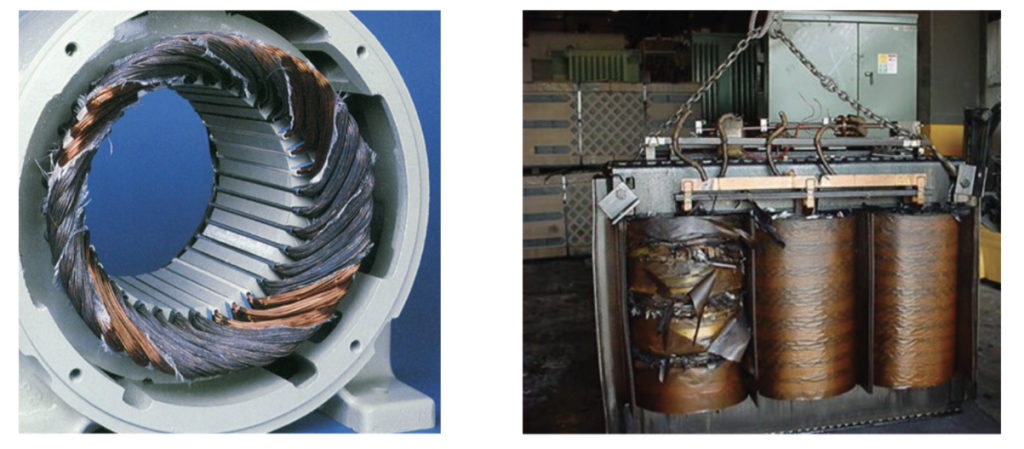
- Equipment running hot or wearing out prematurely. Certain power quality problems cause equipment to generate excess heat, gradually degrading internal components. Facilities experiencing this often see higher maintenance costs with no clear explanation.
- Increased energy costs. Poor power quality can cause equipment to draw more energy than it should or waste energy as heat. Because the increase is often gradual, it can go unnoticed for months or years.
- Intermittent, hard-to-diagnose problems. A machine that trips once a week, a system that occasionally loses data, or a control panel that resets at random — these problems waste significant maintenance hours before anyone thinks to investigate the power.
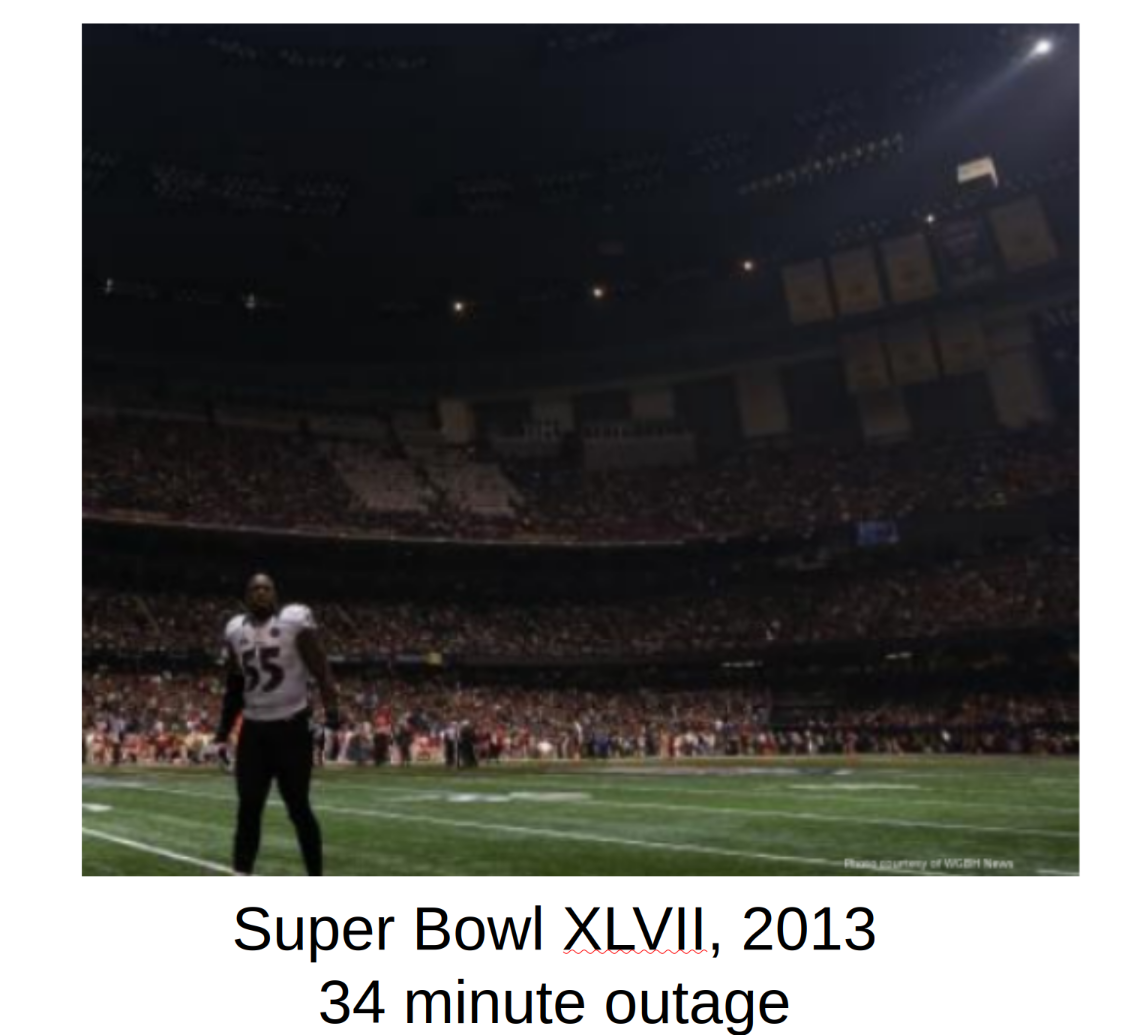
- Complete power loss. The most recognizable power quality event is an outage. These can be caused by weather, equipment failure, animals contacting power lines, or problems at the utility. The impact is immediate: full operational shutdown and potential data loss.
What Causes These Problems?
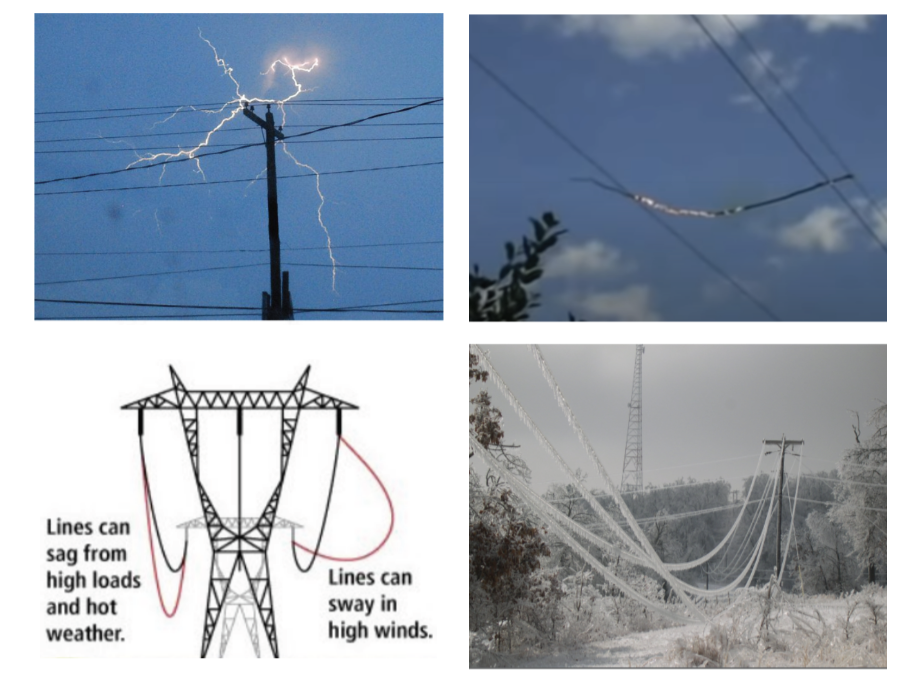
Power quality problems come from both outside and inside a facility. External causes include weather events, problems on the utility’s system, lightning, and sudden changes in demand from other customers on the same part of the grid. Internal causes — which are often overlooked — include large motors starting up, certain types of lighting and electronics, electric vehicle chargers, and equipment that draws power in irregular patterns. Many facilities are surprised to learn that the source of their problems is their own equipment.
Why It Matters
The consequences of poor power quality go well beyond flickering lights. Power quality directly affects:
- Downtime. When equipment shuts down unexpectedly, operations stop. In manufacturing, healthcare, and data management, even brief downtime can be extremely costly.
- Equipment life and maintenance costs. Equipment exposed to poor power quality wears out faster and requires more frequent maintenance. These costs add up quietly and are often attributed to normal wear rather than a fixable root cause.
- Energy costs. Poor power quality can increase energy usage without any change in operations. Fixing the underlying issues can lead to measurable savings on utility bills.
- Safety and compliance. In healthcare, laboratory, and industrial settings, power quality affects the reliability of critical systems. Some industries require facilities to maintain certain levels of electrical performance.
- Reputation and reliability. Repeated disruptions erode confidence in a facility’s ability to operate reliably, with real consequences for customer-facing operations and service-level agreements.
With growing automation, electric vehicle adoption, and renewable energy integration, power quality is not a problem that is going away — it is one that is becoming more important.
What Can Be Done About It?
Addressing power quality typically involves three steps: monitoring, diagnosing, and fixing.
Monitoring is the foundation. You cannot fix what you cannot see. Power monitoring devices are installed at key points in a facility’s electrical system and capture recordings of abnormal events for later review. At PMI, our monitoring devices pair with PQCanvass, a platform that allows captured events to be viewed and analyzed from any device with a modern web browser.
Diagnosing the root cause is often the hardest part. A single symptom can have many possible causes. To help with this, PMI developed Merlin™, an AI assistant that reviews recordings from power quality monitors, identifies what happened, and suggests potential causes and fixes. Users can also ask Merlin™ follow-up questions to better understand the findings.
Fixing the problem depends on the diagnosis. Some problems are solved by installing protective devices that shield equipment from sudden disturbances. Others require backup power systems or filtering devices that clean up the power before it reaches equipment. In some cases, the fix is as simple as changing how or when certain equipment is used.
Conclusion
Unexpected shutdowns, shortened equipment life, rising energy bills, and intermittent problems that no one can explain are all signs that the power flowing into a facility may not be as clean or consistent as it needs to be. These are not just electrical problems — they are business problems.
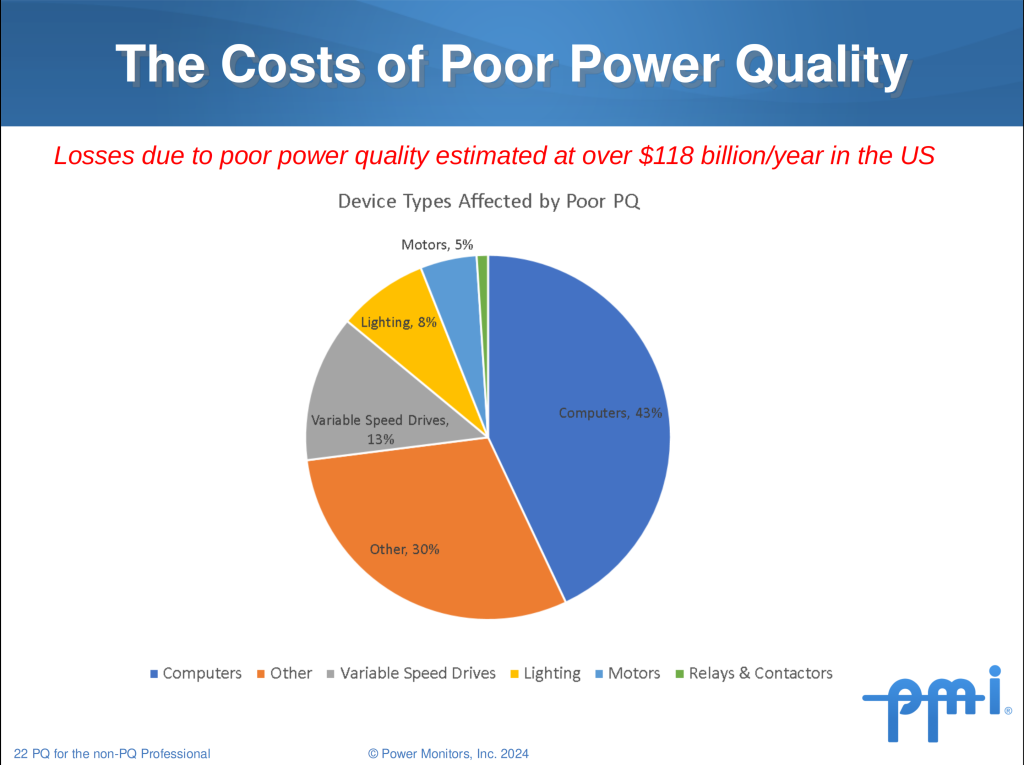
The good news is that power quality problems are identifiable and fixable. With the right monitoring, diagnostic tools, and corrective measures, organizations can protect their equipment, reduce costs, and avoid disruptions before they happen. As our dependence on electricity continues to grow, investing in power quality is not optional — it is essential.
Additional Resources
To see Merlin™ in action scan the QR below or visit www.powermonitors.com/merlin-in-action