Abstract
The explosive growth of datacenter infrastructure in the United States continues to reshape electricity consumption patterns, now constituting a substantial and rapidly growing share of both total load and peak demand.
In an earlier white paper, we explored the basics of datacenter power consumption. This paper draws on findings from IEEE TR-131 (2025) to explore the implications for grid interconnection, protection coordination, power quality expectations and reliability support planning.
From Large Load to Grid-Constraining Growth
In our white paper, Datacenter Power Consumption, we noted that U.S. datacenters consumed an estimated 150 TWh in 2023, and IEA projections suggested a doubling by 2026. Berkeley Lab estimated 176 TWh in 2023 and forecasts total annual energy consumption will reach 325 to 580 TWh by 2028, a two-to three-fold increase in just five years. Source: 2024 United States Data Center Energy Usage Report
By comparison, the Federal Energy Regulatory Commission (FERC) forecasts a more conservative 306 TWh of datacenter load by 2030. In the previous paper, we noted that the power used in 2023 by datacenters in the US could power the average American home for 14 million years. These demand forecasts range between powering that average home for somewhere between 28 and 54 million years.
While there is a great deal of room between those estimates, there is massive investment expanding datacenters, and even the low end estimate is still nearly doubling in capacity in a few short years.
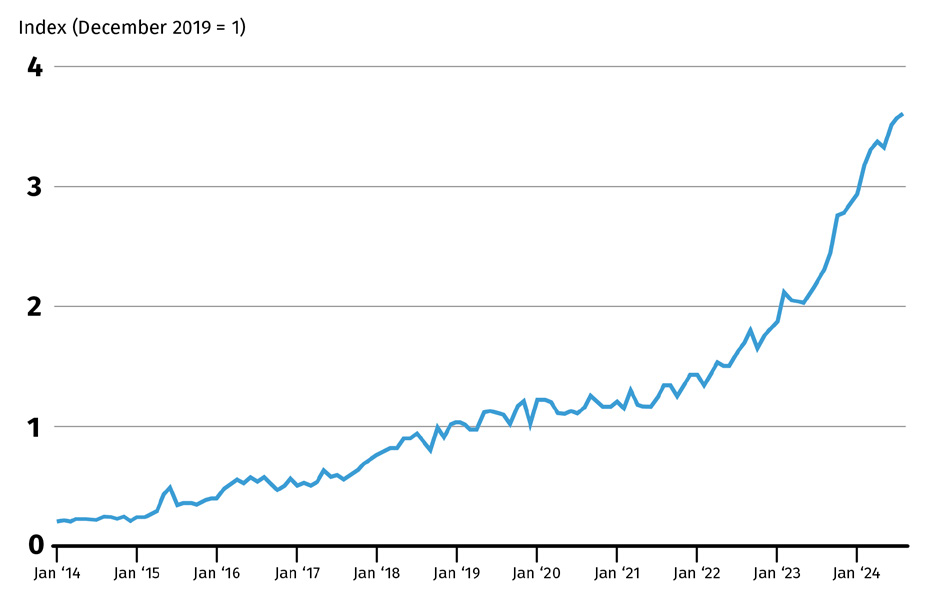
If realized, the upper-end estimate would make datacenters the dominant source of new load growth in the U.S. electric system. In the human-scale example above, datacenter consumption could be equivalent to 28-54 million homes’ annual consumption.
Given the US currently has roughly 85 million single family homes, it is not difficult to imagine datacenter load eclipsing residential load nationwide in the coming decade. Unlike residences, datacenters are rapidly deployable, highly concentrated, and operate at near-constant load 24/7.
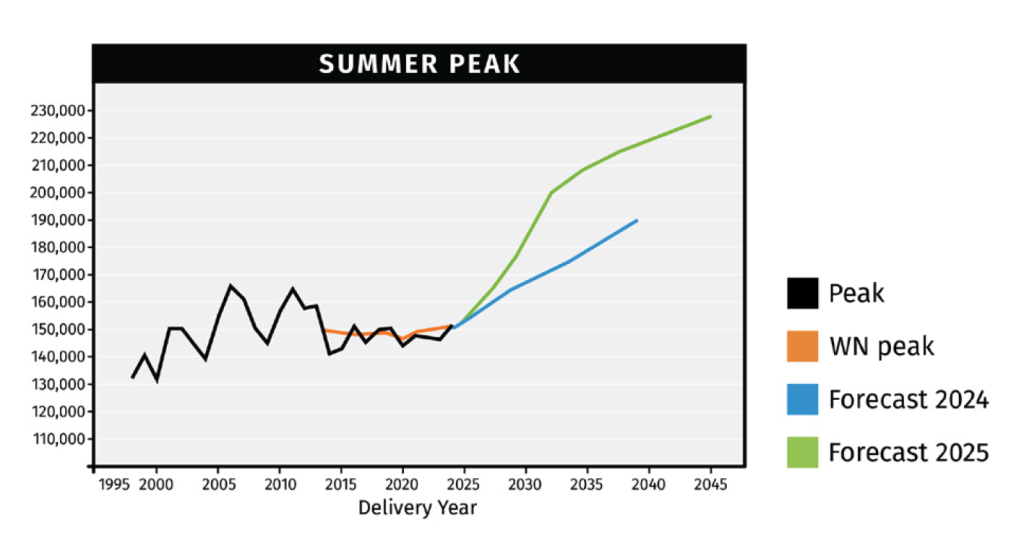
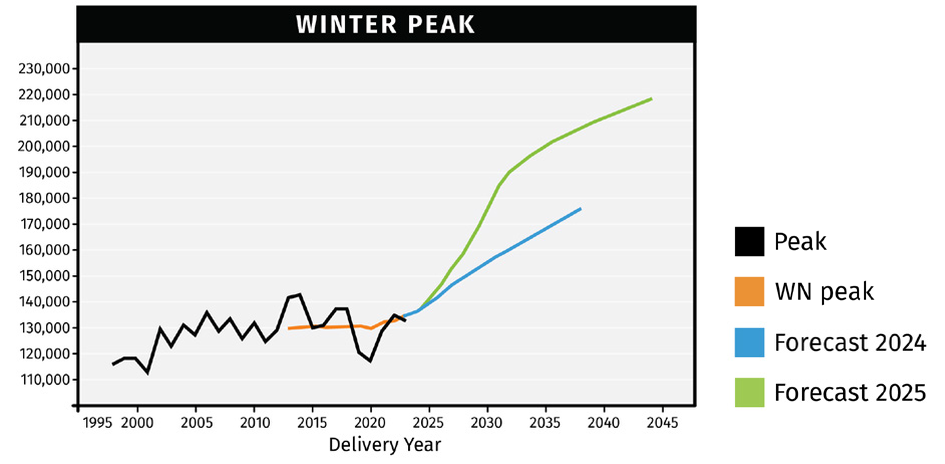
IEEE TR-131 includes a handful of regional examples, one of which is PJM, the RTO serving from the Mid Atlantic out to Chicago, which includes the dense “Datacenter Alley” in Northern Virginia (and also includes Power Monitors, Inc, which is unlikely to demand as much power as a datacenter). PJM expects the next decade to dramatically increase peak demand.
Challenges
IEEE TR-131 outlines some engineering challenges driven by datacenter development. Several new campuses by major US tech companies have power requirements exceeding 1GW, far larger than typical substation designs. Conventional planning and construction timelines (5 to 10 years for major transmission upgrades) are far longer than typical datacenter deployment schedules (2 to 3 years from land purchase to energization).
This mismatch introduces a growing interconnection queue and mounting pressure on local utilities, to which some interesting solutions have emerged. Microsoft is working with an energy provider to restart the Three Mile Island nuclear facility. Outside of Pittsburgh, an industrial park is under development to place modular 25 MW gas generation facilities directly alongside high load customers. Earlier this year, FERC began a review process to establish clear guidelines around co-location of power generation with major load industries, anticipated to release in 2026. Source: FERC
Unlike traditional loads, datacenters have a unique load profile and are highly dependent on power electronics, which can adversely impact the grid’s stability. Utilities must therefore be prepared for the substantial and unique energy demands of datacenters to ensure the grid remains reliable.
One of the primary challenges is short-term load forecasting. System operators rely on accurate, hourly load forecasts to develop next-day plans, but datacenters complicate this process. Their load profiles are not static; they change with seasons, holidays, and even from initial energization to full deployment. The periodic, millisecond-to-second power swings, especially from workloads like AI, are particularly difficult to predict and manage. To address this, transmission operators need to establish clear processes for datacenter ramp-ups and ramp-downs, and datacenters must provide their detailed load profiles to utilities.
Another area of concern is demand response (DR). While datacenters with flexible loads, such as AI training and crypto mining, can participate in DR programs to help balance supply and demand, there are significant obstacles. These include operational complexity, as datacenters must maintain uptime for critical services, and reliability concerns, as shifting power can pose risks to continuous operations. The financial incentives may not be enough to offset these risks, and regulatory hurdles, particularly with the use of diesel generators for backup power, present a major conflict with sustainability goals. The use of diesel generators for backup power is further complicated by stringent air permit regulations that can limit run times.
IEEE TR-131 also outlines challenges in load shedding and blackstart plans. Datacenters are integral to modern infrastructure, supporting critical services like healthcare and emergency services, yet their large loads can be problematic during a grid restoration event. If the grid can’t support adding a large load early in the restoration process, datacenters may have to operate on their own backup power for hours or days. This highlights the need for utilities to classify datacenters based on their criticality and for collaboration between datacenter owners and utilities to share data and conduct real-time drills.
Finally, the report discusses system disturbances and grid performance. Datacenters, with their sensitive power electronic equipment, may trip offline during normal fault-clearing events, as seen in a recent incident in Northern Virginia where 1,500 MW of load was lost. This “grid-unfriendly” behavior is similar to that of other inverter-based resources and can be exacerbated by a “weak” grid. Datacenters also introduce power quality issues due to their nonlinear loads and high switching characteristics, which can increase harmonic distortion and cause voltage flicker. The report specifically notes that AI workloads, with their distinct power swings during training and inference phases, pose a new challenge. To mitigate this, datacenters may need to implement power management strategies like power capping and frequency locking.
Of particular note, IEEE TR-131 points out that typical monitoring equipment records RMS measurements over 12 cycles, which could average out the important characteristics in a datacenter load change. Similarly, many recorders lack the ability to record beyond the fundamental harmonic, limiting usefulness. Fortunately for our clientele, PMI recorders go beyond those ‘typical’ measurement setups.
Recorders like the Bolt and Seeker record up to the 51st harmonic, sampling well above the rates recommended in IEEE TR-131, and stream captured waveforms to PQ Canvass. For more information about using Power Monitors equipment to record harmonics and capture waveforms, see below:
- Recording Harmonics
- Harmonics from Periodic Waveform Capture
- Adjusting Waveform Capture Sampling Rates
- Waveform Capture with Transient Capture Overlays
- Transient Capture vs. Waveform Capture
Conclusion
Datacenters have emerged as a leading driver of new electricity demand in the U.S. grid, with projected growth rates far exceeding the pace of conventional transmission and substation development. IEEE TR-131 highlights not only the scale of projected load, but also the nuanced engineering and protection coordination challenges that utilities must now address.
PQ engineers play a critical role in ensuring datacenter interconnections do not erode reliability. With the right instrumentation, planning criteria, and standards enforcement, utilities can meet the needs of these digital factories without compromising power quality or system integrity.