Abstract
The rise in popularity of electric vehicles is becoming an important topic among electric utilities. The effects on the grid (in terms of load and power quality issues) are wide and varied depending on the types of vehicles, chargers, and myriad other small factors (such as geographic location, time of day, etc). Often times, utilities will be in the position of making a recommendation as to which charger to install in residential and commercial applications. This white paper aims to provide some information on the different types of chargers available to residential and commercial end-users, and utility-friendly features that can help reduce the burden of widespread EV deployment.
Basics of EV Chargers
Before discussing specific features of EV chargers, it is helpful to review some of the basics. There are three basic “charging level” classifications for electric vehicle chargers: Level 1; Level 2; and Level 3. Each level increases in complexity and power output, and each will be described below.
Level 1 “chargers” aren’t actually battery chargers themselves. At this level, this is a simple 120V plug/cable, and the charger is internal to the electric vehicle. Most electric vehicles include a charging cable that allows the user to slowly charge the car battery from a standard 120V receptacle. A typical Level 1 accessory is shown in Figure 1, from a Nissan Leaf. The power draw in this situation is under 2 kW, and is comparable to a small single phase appliance load.
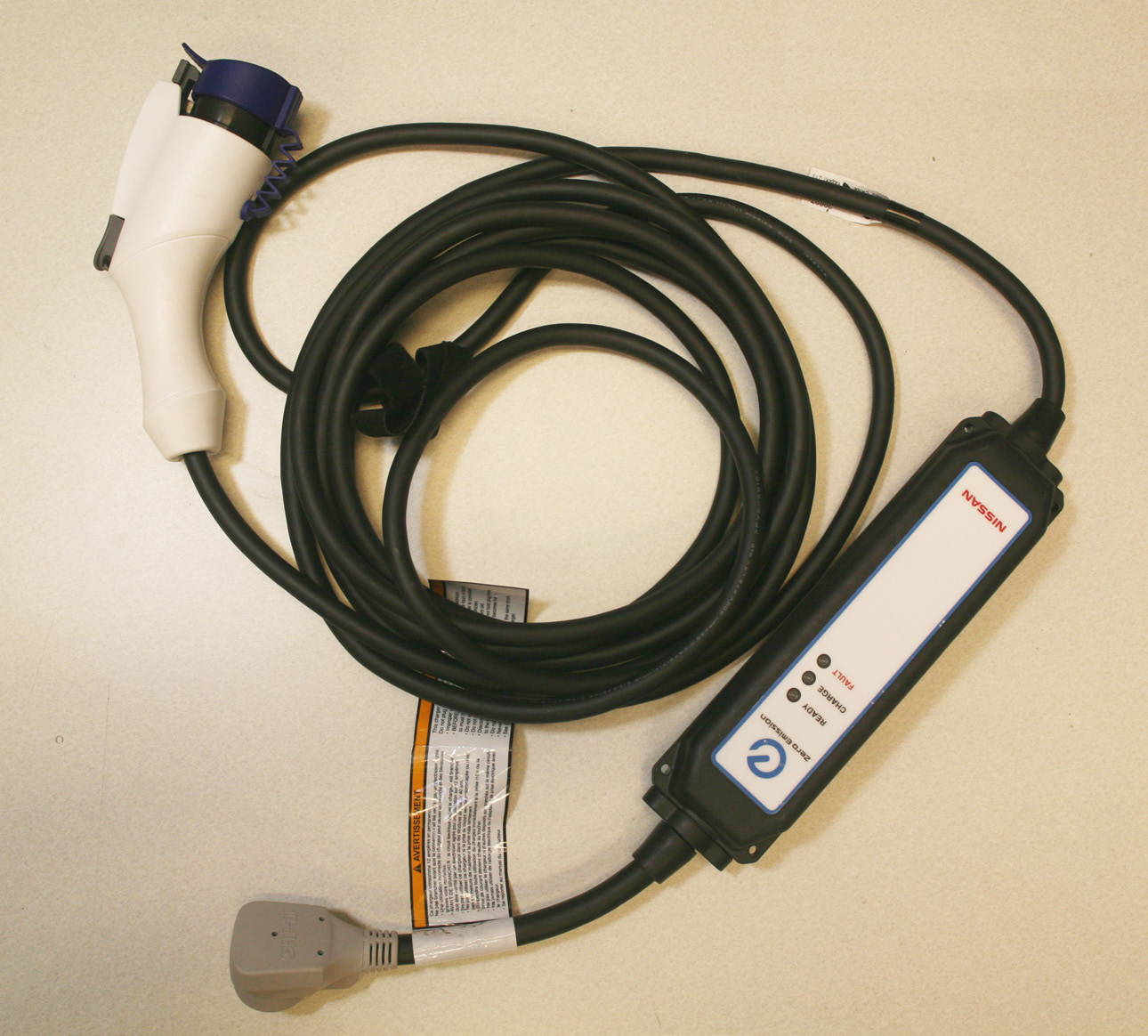
Since the load is so small, there are really no power quality concerns for this particular charging level, though the customer should be made aware of the increased charging time necessary for this slow option. Often times it will take many hours to recharge a vehicle even after only a modest discharge. There isn’t much scope for the utility to make recommendations here, since the 120V option is usually included with the vehicle. Also, due to the long charging time (up to 20 hours), there may not be much opportunity for managing the start or stop of charge. However, from a utility perspective, Level 1 charging may be the most preferable over any Level 2 system, since the total charge kWh is spread over a long time period.
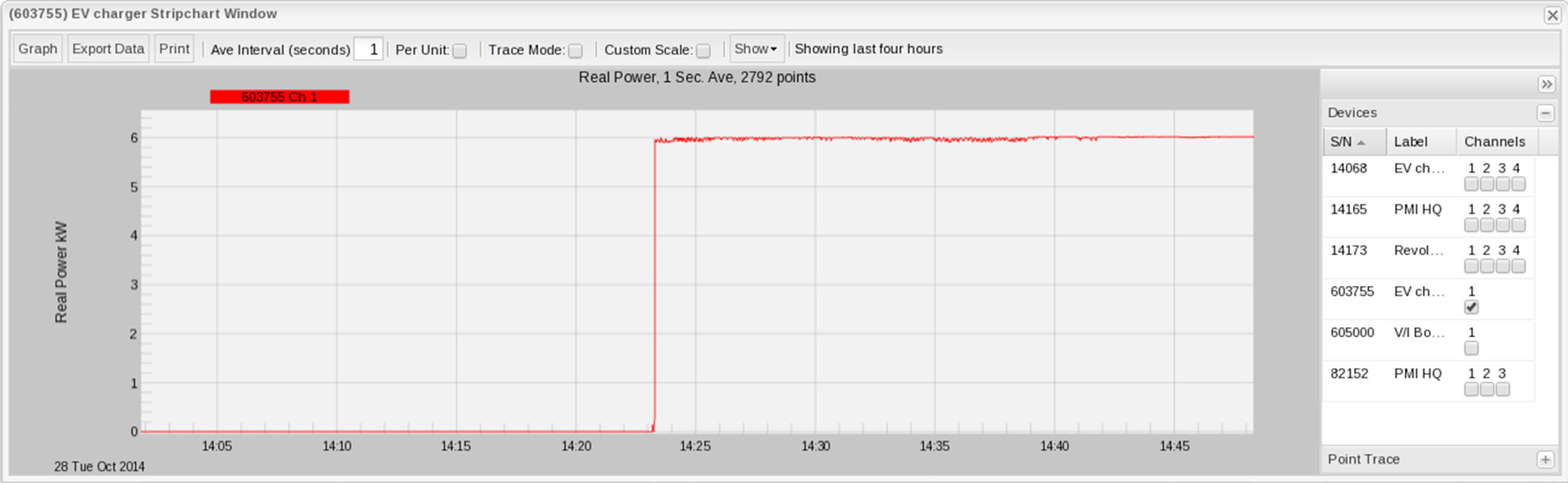
The second level chargers (Level 2) are also not actually external chargers — they act as a simple AC switch that feeds line voltage to the electric vehicle, which has its own internal charger. This level of charger is the highest power charger available for residential and light commercial use, and can deliver between 6 and 19kW of power. This rate allows for vehicle charging in around four hours. In commercial situations, Level 2 chargers are common in areas where EV charging is a perk or extra benefit of an existing commercial business (e.g. hotel parking lots, etc.) Although the “charger” simply switches the AC line voltage (typically 208 or 240V) to the vehicle, there is some intelligence in the charger to communicate to the car how much current is available. The internal car charger may then draw up to the allowed amount. Widespread deployment of Level 2 chargers, especially in residential areas, has the potential for adding significant extra load to the distribution system. This is especially true if EV charging is not spread over an extended time period. A typical Level 2 charger is shown in Figure 2. This charger supplies 6 kW when fed by two phases of a 120/208V 3-phase system, as measured by a Boomerang in the web-based Canvass system (Figure 3).
The third (and highest) level chargers (Level 3) are high power “commercial grade” chargers. They consume between 20 and 120kW. These are the only chargers that are true external chargers — they use the incoming AC voltage (usually 3-phase) produce the managed DC voltage which is then delivered directly to the vehicle battery system. Level 3 chargers are most common in commercial car charging stations where fast charging is essential, and is the primary purpose of the business. There are several different Level 3 standards, and in most situations installations with significant amount of Level 3 charging will involve working upfront with the utility due to the amount of power required in one location. For this reason, Level 3 chargers are not discussed in this whitepaper.
Utility Considerations
Considerations for the utility are mainly for Level 2 chargers, where the power is significant enough to be noticed. Power quality and voltage regulation can be challenges that the utility must face, especially with the rapid increase in load-hungry electric vehicles in areas that were not planned for this type of load. This section will discuss some of the primary concerns for utilities and some features that electric vehicle chargers make that can significantly help in load distribution, timing, etc.
Features of EV Chargers
An extremely useful feature found in many Level 2 chargers is “time delayed charging.” Essentially, this is exactly what it sounds like: charging can be put on a timer (delayed) so that the load is introduced to the distribution system outside of peak hours. This can be useful, for example, when a customer returns home and knows that they will not need the vehicle again until the following morning — so charging can be deferred from peak hours (dinner time when ovens and televisions, etc. are on) to the middle of the night. Some of the more robust chargers also allow a small charge at all times to maintain the state of battery charge (preventing slow discharge). Delaying the charge until later in the evening prevents the situation where everyone arrives home from work in the evening and starts making dinner while their EVs are charging – increasing the late-afternoon/early evening peak demand. Since a Level 2 charger can complete a charge in a few hours, the charge start can be deferred until later at night, helping to shift the load to off-peak times. Some chargers can also be programmed to only report a smaller amount of available current during peak times, limiting the car’s charge rate to a manageable amount until off-peak times are reached. At that point, the charger will indicate that the full current is available, allowing for fast charging at a better time for the grid.
Some vehicles and chargers have the ability to calculate time to full charge based on the current state of the vehicle’s battery. This, combined with the ability to stagger charging start times, can help significantly in distributing the load over many hours. For instance, if the charger can calculate that it will take only two hours to completely restore the charge for the battery and that the vehicle will not be needed until 07:30, then it can delay starting until 05:00 or 05:30 to ensure that the vehicle has a maximum charge by the time it will be needed again. On the other hand, the charger may calculate that it will need 12 hours to replenish the charge and can therefore begin the charging process much earlier in order to ensure a full charge when the vehicle is next needed. Although not always available, using a “time to finish charge” instead of “time to start charge” approach is often the best overall strategy for spreading EV load through the night.
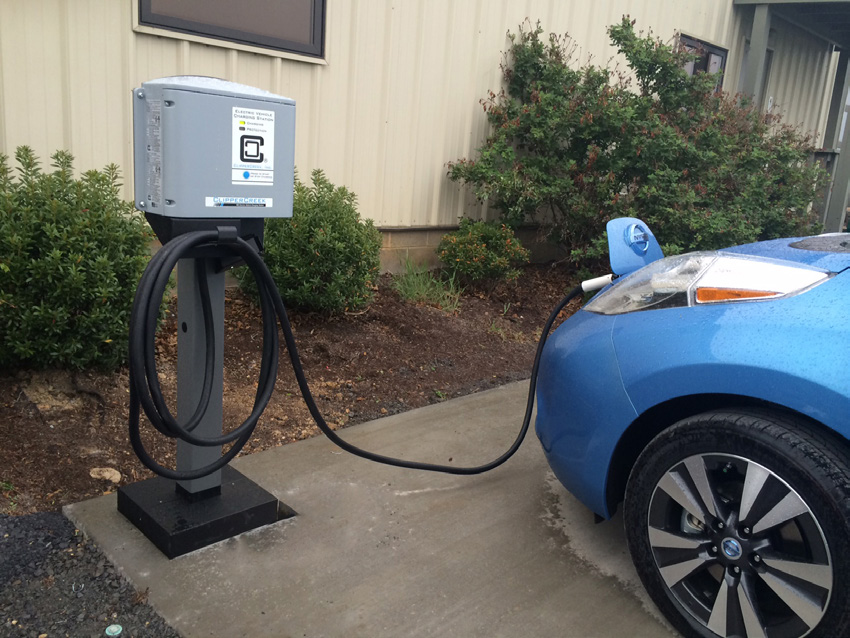
A final feature to discuss is the “cold-load pickup management” feature found in some of the more high-end chargers. The issue here is that when power is restored following an extended outage, many loads that were randomly cycling off and on become synchronized when power is restored, and turn on simultaneously. For example, water heaters, refrigerators, heat pumps, etc. may all switch on as soon as power is restored, causing much higher than normal load currents – these are the “cold-loads.” Some EV chargers can avoid adding to this problem. With these chargers, in the event of an outage and restoration, these units will stagger their recovery to reduce cold load pickup. Essentially, instead of all of these vehicle chargers coming back online immediately after power is restored, they will hold off at staggered intervals and slowly resume charging. As an example, the charger shown in Figure 2 can be programmed with a random power-up delay after an outage before reporting available power to the vehicle, helping to reduce cold load pickup effects.
Even in situations where the utility may not be able to recommend a charger, or for customers with just the built-in factory 120V charger, there is still an opportunity for improvement. Since with Level 1 and 2 charge systems, the actual DC charger is in the vehicle, the vehicle itself may include some utility-friendly features. For example, the Nissan Leaf is very flexible, allowing the user to set a charge start time, or end-of-charge time. This may also be programmed differently for each day of the week. Encouraging and educating customers on features they may already have can help spread EV charging load to off-peak times without any specialized external chargers.
Conclusion
Electric vehicles are becoming more prevalent and as they do the power quality challenges associated with charging them are becoming more prevalent as well. There are several utility-friendly features that some chargers possess to help reduce voltage regulation issues, and should be promoted where possible. The different charge levels and load distribution features available are presented in this whitepaper to help reduce the impact on the grid.