PMI offers an array of monitoring devices for just about any utility distribution monitoring need. Data needs, location, and communications requirements are all factors involved in selecting the right monitor for an investigation or permanent installation. An overview of PMI devices is given here, along with guidelines for making the best choice.
A comprehensive power quality study requires a sophisticated recorder capable of measuring much more than RMS voltage, current, and power. Harmonics, waveform capture, IEEE flicker, CBEMA/ITIC events, and even interharmonics and high speed transient recording may be needed. The Revolution PQ recorder (Figure 1) measures and records each data type, along with daily profiles, histograms, and other utility-specific events. With transient recording to 1 microsecond, 1 GB of memory, and IEEE compliant harmonics, interharmonics, and flicker recording, the Revolution can help solve even the most complex PQ problems. The Revolution is also best suited for formal IEEE 519 harmonic surveys. Low-profile meter socket form factor allows for foolproof installation – no voltage leads or CTs to install.
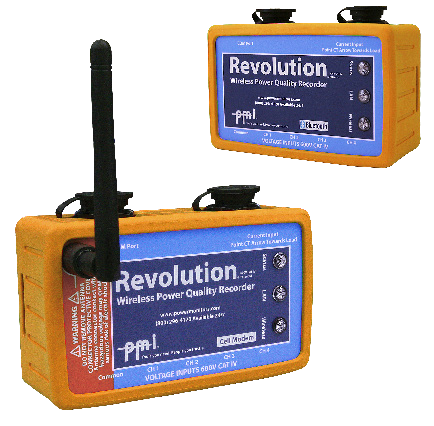
In general, PQ recorders are best for investigating utility customer voltage complaints, mis-operating equipment, transient or harmonic problems, and other studies where detailed information is needed. For permanent monitoring of a substation or sensitive customer location, the Revolution and cell Guardian remote communications options allow for continuous PQ monitoring and triggered email alerts.
PQ Investigation
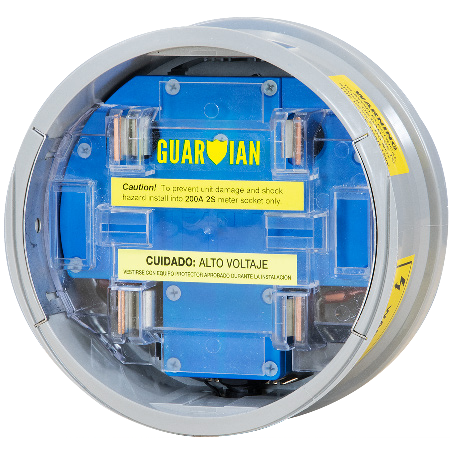
The Guardian (Figure 2), designed for residential applications, includes most of the capabilities of the Revolution, in a Form 2S package. The Guardian is especially useful in single-phase residential investigations to examine IEEE flicker measurements, ITIC/CBEMA event capture, and net metering/power flow recording.
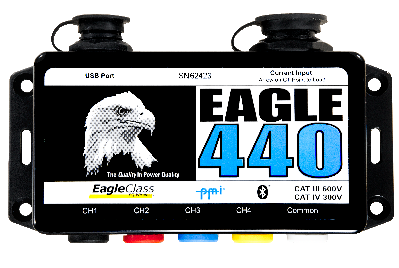
The Eagle (Figure 3), available in 2, 3 and 4 channel configurations, is a general-purpose PQ recorder. Its small size combined with a high performance vs cost profile make it a popular choice for typical distribution problems such as voltage sags, cap bank and voltage regulator problems, motor-start studies, or harmonic profiling. Like the Revolution and Guardian, the Eagle stripchart recording interval may be set as low as one 60Hz period, giving cycle-by-cycle trend data for the entire recording.
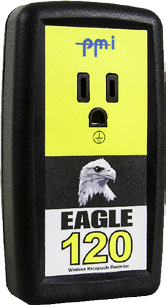
The Eagle 120 (Figure 4) brings full PQ monitoring to a 120V receptacle. With the same recording ability as the Eagle 220/330/440, the Eagle 120 allows for recordings beyond the revenue meter. A Guardian or Revolution at the service entrance, combined with an Eagle 120 inside the site, provides a complete picture of voltage quality as delivered by the utility, and as seen by the load.
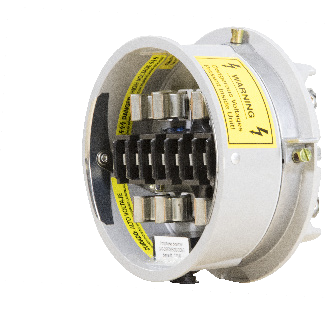
The iVS-2S+ and iVS-3S (Figure 5) meter socket recorders are especially designed for Form 2s and polyphase meter base installations. Several iVS-3S styles are available to cover the many polyphase self-contained and CT-based meter bases. These PQ recorders offer single-cycle min/max recording, harmonics, basic waveform capture triggering, and GE flicker capture.
Steady State Monitoring
While a PQ recorder may be used for steady-state RMS voltage, current, and power monitoring, the Boomerang series was built for this application. All Boomerang models measure RMS voltage, with RMS current, real power, and apparent power as options. All measurements have 1 second resolution. The Boomerang itself is not a recorder – the measurements are sent through cell modem or Ethernet to Canvass, PMI’s cloud-based data storage and analysis system, and are pollable through a DNP SCADA interface.
Unlike most PQ analyzers, the Boomerang is most often used in permanent installations to provide continuous long-term monitoring anywhere in a distribution network. The 1-second resolution exceeds that available from any AMI system. This high resolution data is needed for analyzing voltage regulator operation, distributed generation power and VAR flow, and voltage unbalance.
Boomerangs are available in 3-phase, pole-mount, Form 2S meter socket, and 120V plug-in form factors (Figure 6). The 3-phase Boomerang is also available with Ethernet communications, including Power Over Ethernet (allowing voltage inputs up to 600VAC).
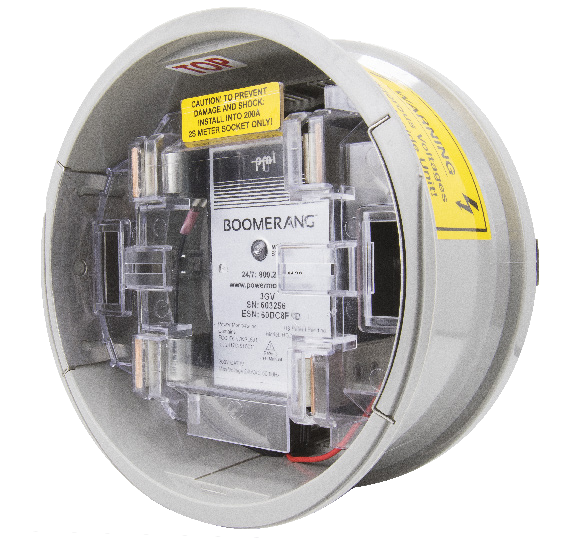
Boomerangs are most commonly used for “smart grid” applications such as volt/VAR optimization, conservation voltage reduction programs, distributed generation, and general distribution system oversight. Boomerang alerts can provide immediate outage notification, and the accumulated Canvass data used to automatically generate regulator statistics such as SAIDI, CAIFI, etc. Combined with Canvass, Boomerangs provide a way to see beyond an existing SCADA system by providing monitoring points past the substation, even at a 120V receptacle.
Communication Options
With modern equipment, communications options are as important, if not more so, than measurement capabilities. Generally, communication methods fall into three types:
- Local wired (USB, serial)
- Short range wireless (Bluetooth, WiFi)
- Remote (cell, Ethernet, WiFi)
Local wired connections require a physical cable to the monitor. Although usable in field situations, this method is best suited for office or meter shop use before or after the recording. All PMI PQ recorders offer a wired connection.
Short range wireless, e.g. Bluetooth and WiFi, provide a much safer method for on-site communications. Both allow communication with the device after a panel or transformer cover is closed, on the ground (while the device is up on a power pole), etc. Laptop, tablet, or iPhone software may be used to view live readings, configure, or download data without exposure to hazardous voltage. This greatly increases safety while using the recorder. The Revolution, Guardian, and Eagle offer Bluetooth. WiFi is also available with the Guardian.
Remote communications options include integrated cell modem, Ethernet, and WiFi. Each of these join the monitor to a network, either private or public. Always-connected remote communications have many advantages over the other methods. In addition to the same physical safety benefits that short-range wireless provides, networked devices can send email alerts for instant notification of PQ or outage events. Once installed, data may be downloaded and analyzed from the office with PC-based ProVision, or, with cloud-based PQ Canvass, viewed directly in a web browser as it’s streamed live from the device. For permanent installations, scheduled downloads may be fed automatically to a standalone system, or stored and managed with PQ Canvass.
CT Selection
Current probes are an important accessory for any PQ analyzer. There are two types: iron core (TLAR CTs) and flexible Rogowski coil (Flex CTs). TLARs have two ranges, 20A and 200A. The 20A range is designed for monitoring 5A metering CT secondaries. The 20A full scale gives a generous over-range capability for metering CTs that routinely exceed 5A, and also allows for branch circuit monitoring. The 200A range may also be used for larger branch circuits, individual loads (such as Variable Frequency Drives), or residential or light commercial service entrance monitoring.
Flex CTs offer three ranges: 200A, 1000A, and 5000A. They’re available in 12”, 24”, 36”, and 48” diameters. Flex CTs are designed for monitoring load current directly. The larger diameters allow for clamping around busbars and bundled parallel conductors.
Conclusion
PMI offers a variety of PQ and steady-state monitoring options. The Revolution and Guardian offer the most advanced PQ measurements along with cell communications for email alerts and remote data access. The Eagle and Eagle 120 provide standard PQ capabilities with Bluetooth for local wireless access. The iVS-2S and iVS-3SX are PQ recorders for single and polyphase meter bases. The Boomerang is designed for distribution system monitoring of RMS voltage, current, and power, not power quality investigations. With much more detailed measurements than any AMI system can provide, the Boomerang can extend a SCADA system’s reach to a residential meter base, inside a pad-mount transformer, or even a 120V receptacle. Data at these locations are important for many distribution automation programs. By using cloud-based Canvass to collect and store all Boomerang data, distribution engineering analysis can be performed in a web browser.