Abstract
The Solid State Transformer (SST) may be a groundbreaking innovation in electric distribution, replacing the century-old “pole pig” with a modern, active power supply architecture. Although still in the early stages, the SST could be a key component in the “digital grid”, solving problems presented by widespread distributed generation, nonlinear loads, and sensitive electronic equipment. The basic architecture, theory of operation, advantages and disadvantages, and the possible impact SSTs may have on power quality are presented here.
SST perform an equivalent function to a conventional low frequency power transformer – transforming a higher distribution voltage to a lower service voltage. They have many advantages and a few disadvantages compared to traditional transformers. SSTs are smart power converters that typically use a high frequency transformer in its inter-stage. The solid-state transformer uses high power semiconductor components that can be configured to step up or down AC level voltages just as a conventional transformer does, but with some major differences. With the proper design, the SST could replace conventional transformers, while providing flexibility for reactive power flow control. This ability to react quickly can reduce voltage sags faster than conventional transformers (which are limited by their inductance), thus improving power quality. This ability to control the transformer’s output is a major building block in creating the digital grid.
The basic architecture consists of a stage of power conditioning on the input and output, and an AC to AC converter. There are several different implementations of this basic design. The AC to AC converter is done in a multi-stage configuration, which may vary some from model to model. Also, there are several different functional configurations, such as SST that can convert a single phase to a three-phase system or a three-phase to a single phase. As shown in Figure 1, the Medium Voltage AC input is converted to DC (A & B), and then fed into a DC link where some energy is stored via capacitors (C). This DC link is used to power a DC to AC converter (D), which operates at a much higher frequency than the typical 50/60 Hz line frequency (usually in the 40 kHz range), to allow it to step down the voltage with a much lighter and smaller transformer (E). Higher frequency transformers require much less iron core material to couple the power between the primary and secondary transformer windings, reducing the mass of the system. This transformer also provides isolation from the SST’s input to output. The output side of the high frequency transformer powers an AC to DC converter (F). The DC output from the converter powers a low voltage DC link (G), which allows more energy storage, and powers the final DC to AC converter (H), which produces a 60 Hz voltage waveform synchronized to the incoming medium voltage signal.
The output voltage of the SST can be controlled by preset voltage points, maintained by changing the PWM, referenced in stage D in Figure 1. The presets can be updated via external communications, allowing the SST’s voltage output to be more stable than a conventional transformer and adjustable when necessary. The lack of moving parts increases reliability and lifetime compared to a tap-changing transformer.
Conventional transformers are designed to be more than 94% efficient at close to their full-load capacity with linear loads; some are as high as 99%. Even with a well-designed system, loads to these transformers will vary, causing the transformers to carry much less or more power than they were designed to carry. Also, today’s technologies with non-linear loads are rich in harmonic content which generate eddy currents in the core of conventional transformers. These eddy currents add resistance and skin effect in the transformer windings, causing additional losses. Some of these non-ideal loads make up over half of a transformer’s load, driving efficiency well below 95%.
On the other hand, the SST, with slightly less efficiency at full loads compared to conventional transformers, can maintain its efficiency over a much larger dynamic power range. Overall their efficiency can be comparable if not superior to the conventional transformers even on linear loads. Because of their design, SSTs do not have the large iron cores plagued with eddy current losses from harmonics, so they handle a non-linear load much more efficiently and can generate less heat than the conventional transformers with a similar power load.

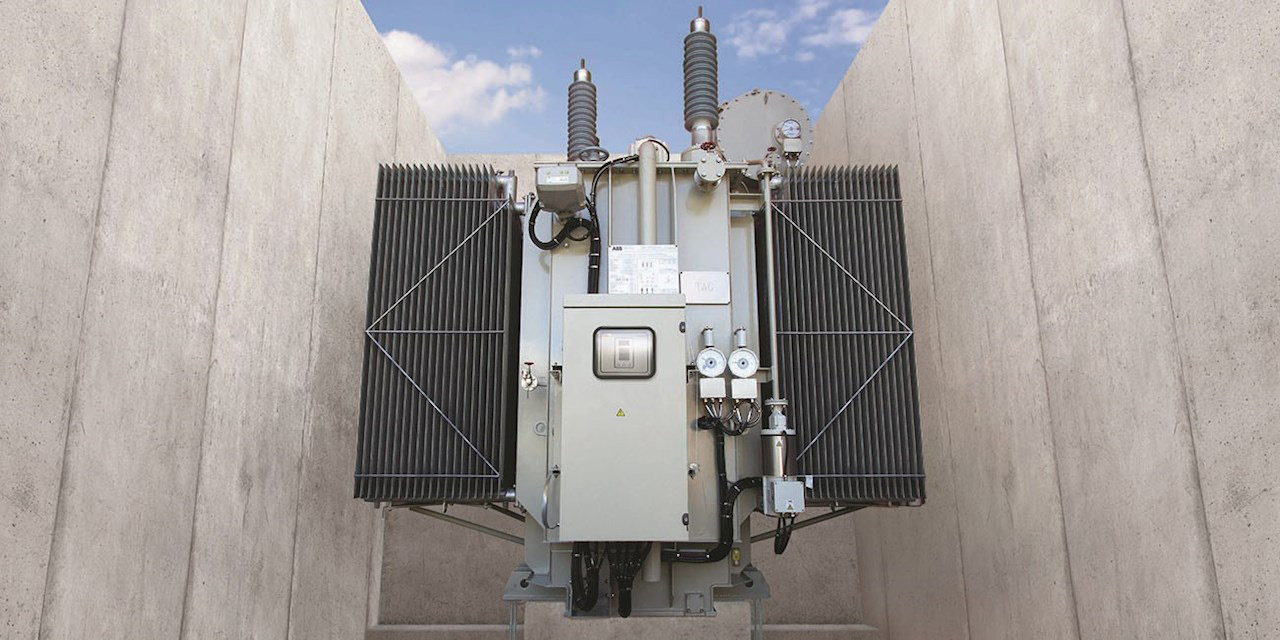
SST Advantages Compared to Conventional Transformer
- Reduction in physical size and weight for the same power rating
- Handles non-linear loads without much effect on overall efficiencies
- Better voltage regulation and reactive power compensation
- Can be controlled remotely to make changes to output voltage and frequency
Most of the SST incorporate voltage sensing with feedback to automatically compensate for load fluctuations locally, but may also be controlled remotely through SCADA.
The SST in most designs convert incoming AC to DC, and then back to AC again. However, if there is a need for DC power output, an SST can provide this easily due to its inter-stage DC link. This architecture also ensures that there is built in reactive power compensation. This gives the SST the ability to isolate any load-related reactive power on the primary from the secondary, and vice versa.
SST have instantaneous voltage sag and interruption compensation. In the inter-stage conversion of AC to DC and then back to AC again, there is a capacitor bank used as short-term energy storage. This storage bank can be used for additional ride-through capacity for momentary interruptions lasting only a few cycles, or with super-capacitors or batteries, for a longer duration. This provides for ride-through during recloser operations and other brief utility events.
Some SST have a fault isolation scheme for addressing sudden output shorts. One scheme has the SST limit the load current to twice the rated current for a specific period, allowing some of the load to continue under a lower voltage condition. If during that time downstream overcurrent protection trips, the SST will detect the reduced current draw and restore full voltage to the remaining loads.
SST have internal DC links which are easier to integrate with renewable energy sources. Electric vehicle (EV) charging and other technologies may benefit by the availability of a DC bus, along with the flexibility of supplying power to AC loads simultaneously.
Some SSTs allow bi-directional power flow when needed. This bidirectional flow may be controlled remotely. They use a dual active bridge (DAB) converter enabling bidirectional power flow, and some can even support an islanding mode. Another high-performance design uses a quad-active-bridge (QAB) type converter. This uses a feed forward technique enhancing the voltage regulations and improving the overall waveform of the SST. QAB converters are typically used where multiple power inputs are needed, such as with renewable energy sources like solar or wind generation.
Disadvantages Compared to Conventional Transformer
One disadvantage of the SST is the higher cost compared to conventional transformers. Since the SST are a new development, up-front engineering and design costs are still high, and medium voltage switching devices are still expensive. As more development and integration take place, along with a larger production volume, future costs will certainly come down.
Longevity and reliability may be less than the conventional transformer due to a more complex system with more active components and failure modes. Conventional transformers tend to stand up relatively well to surges and lightning. Their larger thermal mass and size compared with the SST is an advantage when standing up to large short duration surges. Solid state components are not as forgiving even with good power conditioning and surge protection. Predicted SST reliability compares more favorably to more complex tap-changing transformers and voltage regulators.
Impact on Power Quality
The design of the SST is a huge determining factor on its PQ impact. Conventional transformers have been in use since Tesla and the first AC systems, and have a long history with power transmission systems. Their effects on the power distribution system and power quality are well understood. SST however are composed of solid-state devices, which are non-linear by nature. This nonlinearity can cause power quality issues if not handled correctly. On the other hand, many of the power quality issues experienced with a conventional transformer are addressed by the flexibility of the SST.
One major difference between the conventional transformer and SST is the ability of SST to isolate PQ issues between its input or primary, and output or secondary. On a conventional transformer, although isolated by its electromagnetic coupling, still passes some of its PQ issues in one form or another through the transformer. In a solid-state transformer, this is not as much the case due to the power being converted from AC to DC and stored and then converted back to AC again. Many waveform disturbances both sustained (harmonics) and temporary (e.g. transients), are removed in the AC->DC conversion. The protection is similar to a double-conversion UPS, which provides its own 60 Hz waveform from a DC bus. The voltage quality downstream of the SST is more dependent on the SST itself than the upstream voltage source. This tends to isolate PQ problems to the SST secondary.
Since SST are power converters, monitoring recommendations for PQ are mostly the same as for monitoring photovoltaic (PV) inverters, wind generation, and uninterruptible power supplies (UPS) which all use non-linear components and inverter-based designs.
Conclusion
SSTs are an emerging technology and very young at this stage in their development. There are many companies currently working on, or have products already developed. Currently, the cost of SST are higher than the conventional simple low frequency models. Initial deployments will be limited to problem locations that require the advantages of an SST. As volumes increase, eventually costs will drop and reliability will rise to the point where SST may be the default transformer rather than the exception.
For Further Reading
- Are Solid-State Transformers Ready for Prime Time?
- Smart Transformers Will Make the Grid Cleaner and More Flexible
- Solid State Transformer For Power Distribution Applications
- Solid State Transformer Market Size Worth $531.5 Million by 2025: Grand View Research, Inc.
- Volume/Weight/Cost Comparison of a 1 MVA 10 kV/400 V Solid-State against a Conventional Low-Frequency Distribution Transformer