Overview
The main breaker tripped in a Motor Control Center. All circuits were meggered and checked out, but no cause was found for the trip. Because none of the load breakers had tripped, an intermittent ground fault or a faulty main breaker was suspected.
A Revolution power analyzer and Flex CTs were installed in tandem to identify the source of the disturbance.
Equipment Setup
A great way to monitor for ground faults is to use the PMI Flex CTs attached to a Revolution and to put the channel four CT around all three power phases (This will work on three phase wye systems where no neutral is pulled to the load that is being monitored).
This setup can be left indefinitely because the Flex CT’s are powered from the Revolution which is in turn powered by the system being monitored. This setup will measure and record any imbalance in current in the three phases. In this case, this is the same current imbalance that the main breaker is monitoring.
A current spike on channel four is much easier to find when viewing the graphs than looking for a spike on one of the phases because in this application channel four will usually show zero amps.
The Revolution was set to record every 15 seconds. This achieves a high enough resolution to compare captured events to time stamps from the distributed control system, however this resolution is low enough to keep the recorded file manageable for long term monitoring.
The Data
After monitoring for several days with no incidents, the main breaker tripped again. The recorded data revealed a series of ground faults. Figure 1 shows an RMS current graph displaying a small ground fault at 06:04 hours.
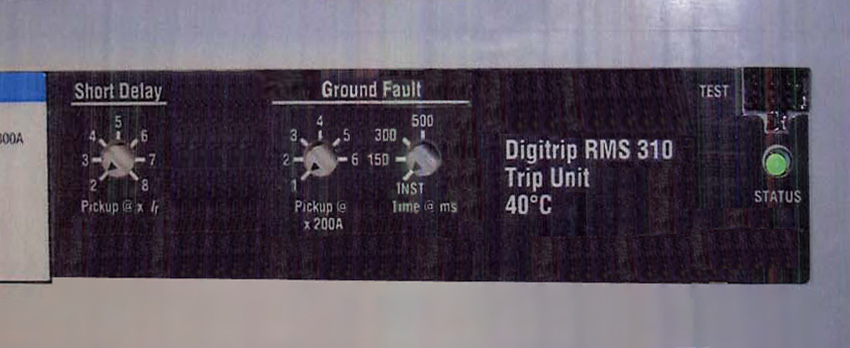
This ground fault can be seen again in a waveform capture shown in Figure 2. The MCC main breaker was set to trip at 200 amps of ground current instantaneously, as shown in Figure 3.
Waveform capture at 06:17:23 hours showed a half cycle ground fault as seen in Figure 4.
Waveform at 06:17:25 hours showed a 3 cycle ground fault as shown in Figure 5.
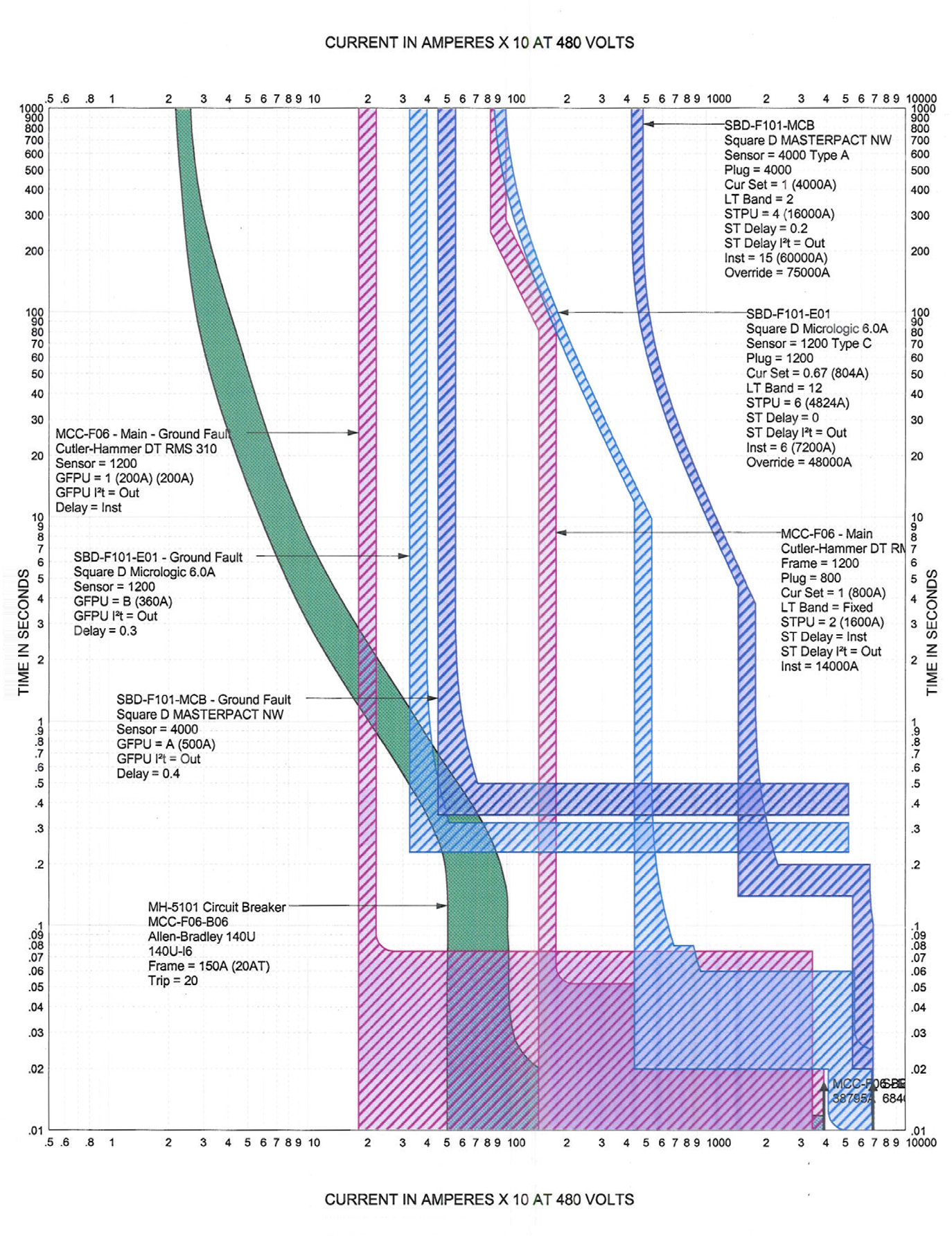
At 06:17:28 hours another 3 cycle ground fault occurred that can be seen in the waveform capture shown in Figure 6. The magnitude and duration of this ground fault was sufficient to trip the MCC main breaker on ground fault. This event is detailed in the Time Current Curves (TCC) and shows why the main MCC breaker tripped and why the load breaker did not trip. This can be seen in Figure 7.
Note, as shown in Figure 8, the current goes to zero at the breaker trip, but the voltage is slowly decaying. This is caused by intermittent fault clearing and downstream motors acting as generators.
The Cause
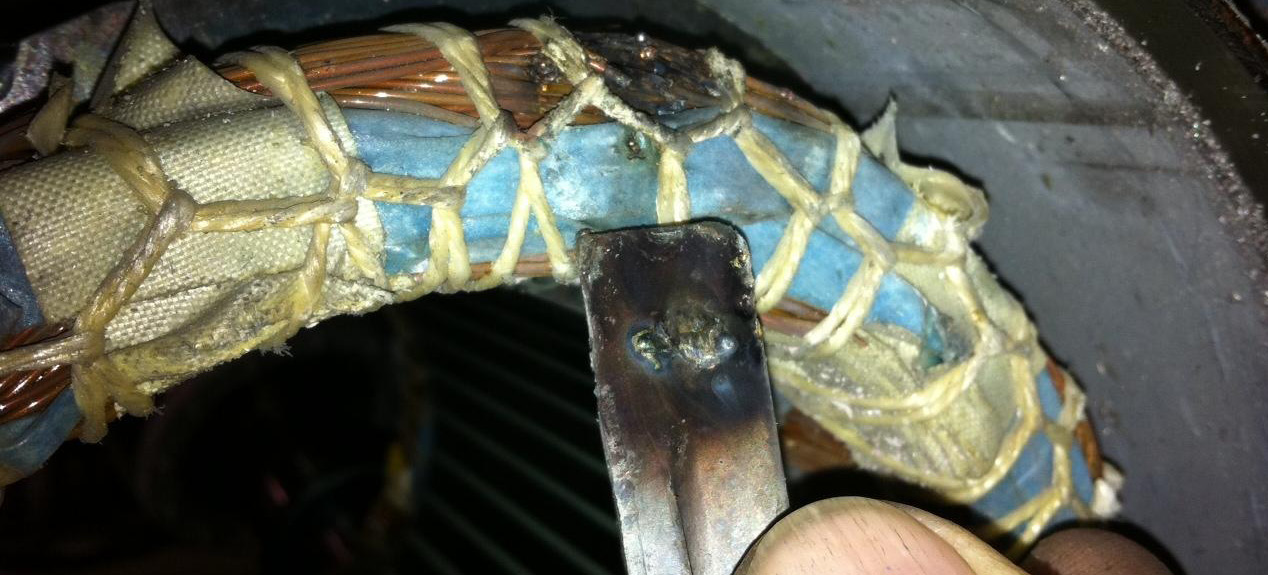
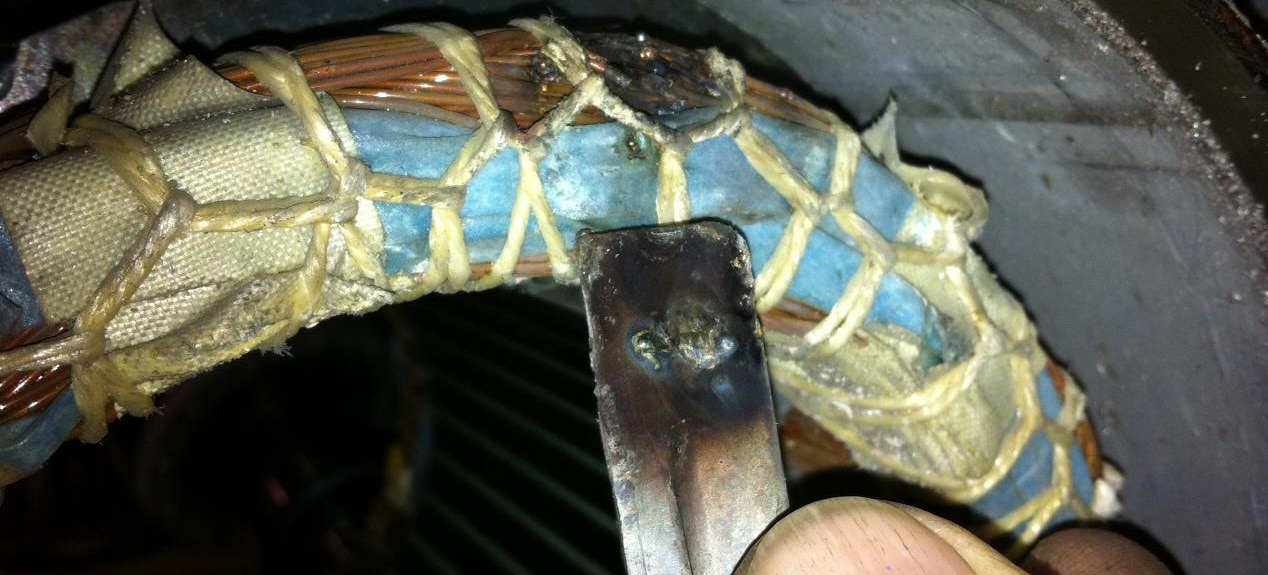
The material handler was shown to be the cause of the breaker trip. The motor is part of a bag lifting material handling system. It is seldom used and only for short periods of time. The fan in the motor was broken, and as a result, windings were being grounded, as shown in Figure 9.
Conclusion
Using the Revolution in tandem with Flex CTs effectively identified the source of a main breaker trip. The Revolution was set at a high enough resolution to compare captured events to time stamps from the distributed control system, however the resolution was low enough to facilitate long-term recording. After several days of monitoring, several ground faults were identified and attributed to a faulty handling system motor.